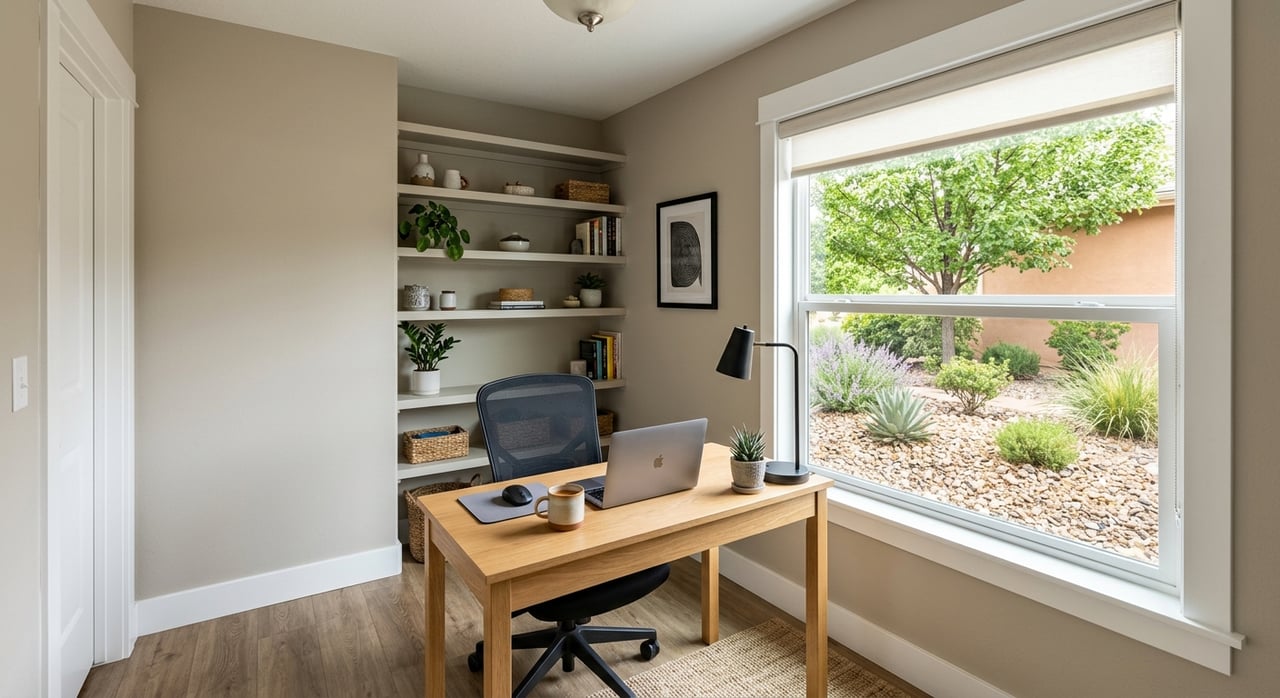
Wondering whether remote work makes city living in Denver more practical, or if the suburbs finally give you the space you have been craving? If you are trying to balance home office needs, lifestyle, budget, and how often you actually commute, you are not alone. The good news is that the Denver area offers several strong options, each with a very different feel. Let’s break down how Denver, Littleton, Parker, and Highlands Ranch compare so you can narrow in on the right fit.
Why Remote Workers Compare Denver and the Suburbs
Remote and hybrid work changed what many buyers want from a home. Instead of choosing only based on a daily drive downtown, you may now care more about office space, internet reliability, nearby recreation, and whether your area feels lively or quiet.
In the Denver area, broadband access is strong across the board. Denver reports a 92.9% broadband subscription rate, while Littleton is at 94.9%, Parker at 98.3%, and Highlands Ranch at 98.1%. That means your decision is often less about internet access and more about housing style, ownership patterns, amenities, and how you want to live day to day.
Denver City at a Glance
Denver has a more compact and renter-heavy profile than the suburban communities in this comparison. The city has a 48.8% owner-occupied housing rate, a median value of $616,000 for owner-occupied homes, a median gross rent of $1,831, and an average commute of 24.9 minutes.
For many remote workers, Denver stands out because of its planning approach and transportation network. The city’s zoning includes row house, multi-unit, residential mixed-use, and downtown core districts, and Denver has also launched a citywide accessory dwelling unit effort to expand housing choice in residential areas.
Best Fit for Urban Convenience
If you want a wider range of attached homes, mixed-use areas, and easier access to transit and daily services, Denver is often the strongest match. The city’s planning framework supports complete neighborhoods and multimodal transportation, which lines up well with a lifestyle built around flexibility.
That can be especially appealing if you work from home most days but still want easy access to restaurants, errands, meetings, and entertainment without needing to drive everywhere. The tradeoff is that your home may offer less space than what you would find in some suburban settings.
Transit and Recreation in Denver
Denver also offers broad public amenities. Denver Parks & Recreation says the system includes 30 recreation centers and nearly 20,000 acres of urban and mountain parkland. RTD’s rail system serves more than 50 stations across six fixed rail lines.
For a remote worker, that means your workday can be built around convenience. You may be able to step away for a park walk, a gym visit, or a quick train trip without needing to plan around a long drive.
Littleton as the Middle Ground
Littleton often makes sense for buyers who want more room than central Denver but do not want to give up connection and character. It has a 61.2% owner-occupied housing rate, a median home value of $630,600, a median gross rent of $1,819, and an average commute of 25.1 minutes.
Compared with Denver, Littleton leans more residential. At the same time, it still offers a real downtown setting and rail access, which makes it a practical option for people who want a suburban feel without feeling too far removed.
What Makes Littleton Different
Littleton’s comprehensive plan calls for a quantity and diversity of housing options. Its land-planning approach considers density, layout, scale, form, and open space, and certain attached and multi-family projects require site-plan review or plan amendments.
For buyers, that suggests a community that values housing variety while also paying close attention to how development fits the area. If you are looking for a place that feels intentional and established, that can be a meaningful advantage.
Littleton Lifestyle and Access
Littleton says it has an authentic historic downtown and two RTD light-rail stations on the C and D lines. The city also notes an existing transportation system that includes buses, light rail, sidewalks, bike lanes, and trails.
On the outdoor side, Littleton has more than 1,400 acres of parks and open space and more than 200 miles of trails. If you want a location where you can work from home, get outside easily, and still enjoy a connected downtown environment, Littleton offers a balanced option.
Parker for a More Suburban Feel
Parker is a stronger suburban play. It has a 71.8% owner-occupied housing rate, a median home value of $646,300, a median gross rent of $2,096, and an average commute of 26.1 minutes.
For remote workers, Parker may appeal if you want a quieter residential base and a market that leans more heavily toward ownership. The town’s housing and planning framework also supports a range of home types, including single-family, duplex, townhouse, and multi-family apartments and condos.
Housing and Planning in Parker
Parker adopted a new Land Development Ordinance in 2024. The town says its development design standards promote high-quality architecture and preserve Parker’s small-town character, and it also has information supporting energy-efficient homes.
That can matter if you are looking at newer housing choices or want a home designed for modern living patterns. A remote worker may find that helpful when prioritizing layout, work space, and long-term utility costs.
Transit Flexibility and Daily Life
Parker describes itself as having a unique Western-Victorian downtown and a hometown feel. For transportation, the town lists options such as RTD Parker FlexRide, Route PD to downtown Denver, Route 483 to Lincoln and Nine Mile light rail, Access-a-Ride, park-n-ride options, and Link On Demand service in select Parker areas beginning April 8, 2026.
Parker also emphasizes parks, trails, open space, and an active community. If your ideal routine includes working from home in a quieter setting and getting out for recreation or local outings, Parker can check a lot of boxes.
Highlands Ranch for Space and Recreation
Highlands Ranch is an unincorporated community, not a city. The Metro District describes it as a 22,000-acre master-planned community with more than 103,000 residents.
Among the four areas in this comparison, Highlands Ranch has the strongest owner-occupied profile at 78.1%. It also has the highest median home value at $712,700, the highest median gross rent at $2,531, and an average commute of 24.2 minutes.
A Master-Planned Community Setup
The Highlands Ranch development guide calls for a balanced mix of residential, commercial, educational, recreational, and nonurban uses. It also references a wide variety of housing types, including one-family, two-family, multiple-family, condominium, apartment, townhome, duplex, and cottage or villa options.
For remote workers, that can translate into more choice within a highly planned environment. If you want a neighborhood structure that feels organized and oriented around residential living, Highlands Ranch may stand out.
Outdoor Amenities in Highlands Ranch
Recreation is one of the biggest draws here. The Metro District manages 26 parks, more than 70 miles of trails, and 2,644 acres of open space.
Transit is more limited than in Denver or Littleton and tends to rely more on bus and connector service. RTD currently lists Route 402L Highlands Ranch Parkway, which connects County Line Station and Littleton Mineral Station, and RTD has also proposed a 2.5-mile Southwest Rail extension into Highlands Ranch.
Side-by-Side Snapshot
Here is a quick view of how these areas compare for remote and hybrid buyers.
| Area | Owner-Occupied Rate | Median Home Value | Median Gross Rent | Mean Commute | Broadband Subscription |
|---|---|---|---|---|---|
| Denver | 48.8% | $616,000 | $1,831 | 24.9 min | 92.9% |
| Littleton | 61.2% | $630,600 | $1,819 | 25.1 min | 94.9% |
| Parker | 71.8% | $646,300 | $2,096 | 26.1 min | 98.3% |
| Highlands Ranch | 78.1% | $712,700 | $2,531 | 24.2 min | 98.1% |
One important takeaway is that commute times are not dramatically different across these four places. For many remote buyers, that shifts the focus away from raw commute minutes and toward lifestyle fit, home layout, and how often you expect to go into the office.
How to Choose the Right Area
If you are trying to decide between Denver and the suburbs, it helps to start with how you actually live, not just where you think you should live. A great remote-work location is one that supports your routine five or six days a week, not just your occasional office trip.
Choose Denver If You Want:
- More urban convenience
- A wider mix of housing forms
- Stronger access to rail and city amenities
- Easier access to recreation centers, services, and dense daily conveniences
Choose Littleton If You Want:
- A balanced middle-ground setting
- More suburban space with a connected feel
- Historic downtown access
- Rail service plus strong trail and park infrastructure
Choose Parker If You Want:
- A more suburban, ownership-heavy market
- Planning that supports a range of housing types
- Bus, park-n-ride, and on-demand transportation flexibility
- A quieter residential base with active outdoor options
Choose Highlands Ranch If You Want:
- A master-planned suburban environment
- A strong owner-occupied profile
- Extensive parks, trails, and open space
- A layout and lifestyle more centered on space and driving convenience
Final Thoughts on Denver vs the Suburbs
Remote work gives you more freedom, but it also makes your housing choice more personal. In the Denver area, the city-versus-suburb decision is often less about commute and more about whether you want urban energy, flexible transit, and mixed housing options or more space, recreation, and a quieter residential setting.
The right answer depends on your routine, your budget, and the kind of home that supports your work and life best. If you want help comparing neighborhoods, weighing tradeoffs, or planning a move along the Front Range, Brent & Jen Patterson are here to guide you every step of the way.
FAQs
Is Denver or a suburb better for remote workers?
- Denver is often better if you want urban convenience, transit access, and a wider mix of housing forms, while suburbs like Littleton, Parker, and Highlands Ranch may work better if you want more space and a more residential setting.
Which Denver-area suburb is best for a middle-ground lifestyle?
- Littleton is the clearest middle-ground option in this comparison because it combines a more suburban housing profile with historic downtown access, rail service, and extensive trails and parks.
Does Highlands Ranch have good recreation for remote workers?
- Yes. Highlands Ranch manages 26 parks, more than 70 miles of trails, and 2,644 acres of open space, making it a strong choice if outdoor access is a priority.
Is Parker a good fit if you do not need rail nearby?
- Yes. Parker may be a strong fit if you want a quieter suburban base and are comfortable using park-n-ride, commuter bus, FlexRide, or on-demand transportation instead of relying on immediate rail access.
Are commute times much shorter in Denver than the suburbs?
- Not by much in this comparison. Mean commute times are 24.9 minutes in Denver, 25.1 in Littleton, 26.1 in Parker, and 24.2 in Highlands Ranch, so lifestyle and housing needs may matter more than commute alone.